No products in the cart.

Behind the Scenes of a Temporary Ice Rink Build
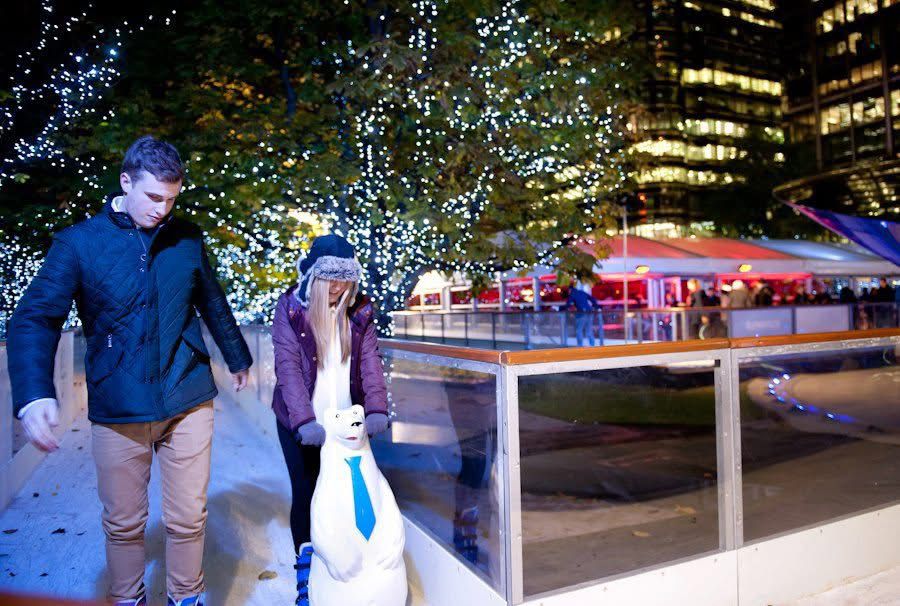
By the time the first skater steps onto a seasonal rink, the hard part is over. What the public sees is lights, music and ice. What they do not see is the weeks of planning and the days of work that made a sheet of ice appear somewhere it has no business being.
Marshalls International has supported temporary and seasonal rinks across the UK and beyond since 1984.
This is a look at what actually goes into one — useful reading if you are considering a rink of your own, and a fair reflection of why the operators who plan early have the smoothest winters.
It starts with dates and a site visit
Every temporary rink begins months before anything is delivered, with two questions: when do you need to be open, and where exactly is this going?
The site tells us most of what we need to know. The dimensions of the pad determine the equipment. The access route determines how the machine gets to the ice. The available power determines whether an electric resurfacer is viable. The storage space determines where everything lives between sessions. Answering those early is the difference between a calm build and an expensive improvisation.
Choosing the equipment around the reality
Once the site is understood, the equipment follows. The resurfacer is matched to the surface size and to how quickly the ice needs turning round between public sessions — a busy attraction running hourly slots has very different demands from a small community rink.
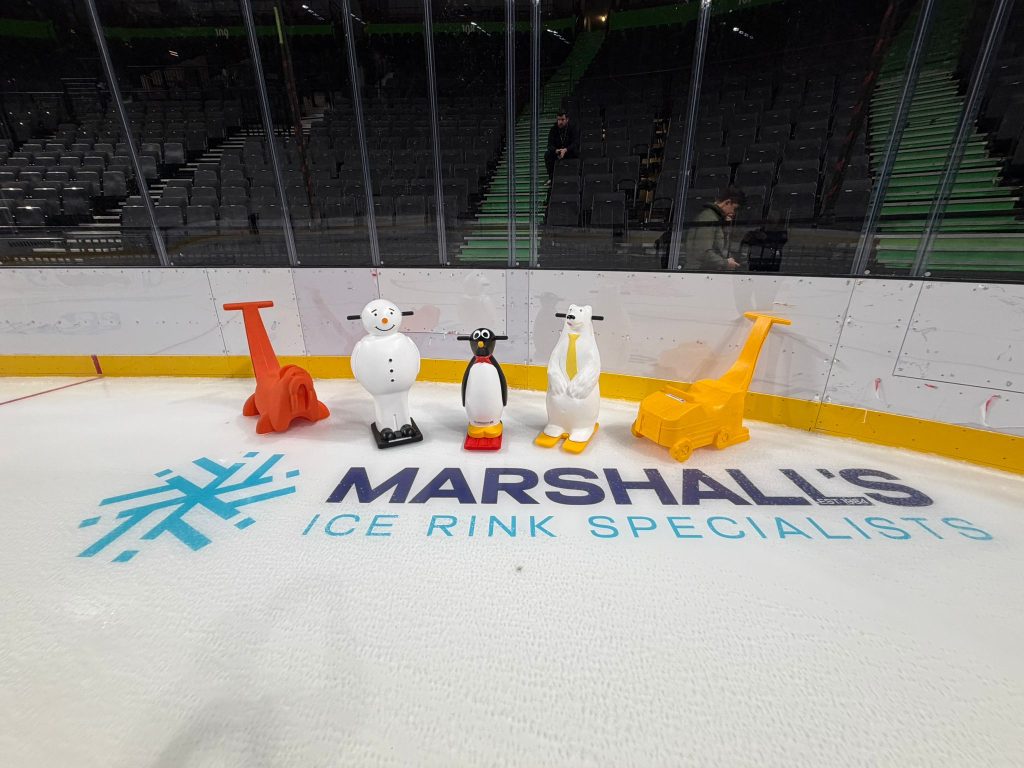
Then come the details that shape the visitor experience: skate aids in the right quantity and mix, because most visitors to a seasonal rink are complete beginners; ice paint and markings if there is branding or sponsorship involved; and the maintenance products that keep the surface in good condition through heavy public use.
Delivery and set-up
Delivery day is where planning meets reality. Machines are large, heavy and unforgiving of a doorway that turned out to be two inches too narrow. This is why we ask the awkward questions early, and why our team would rather walk a site in September than discover a problem in December.
Set-up covers positioning and commissioning the equipment, checking it over after transport, and making sure everything the operator needs is in place — not just the machine, but the practical things around it: where it parks, how it charges or refuels, and how it gets on and off the ice safely with the public around.
Training the team
Seasonal rinks are often staffed by people who have never driven a resurfacer. That is completely normal, and it is why training is part of the job rather than an optional extra.
Our driver training covers all makes of machine and includes real on-ice practice, so operators are confident before the first public session rather than learning under pressure with an audience watching. Good ice is largely a product of a confident, well-trained driver — the machine can only do so much on its own.
The first ice
Laying the first ice on a temporary rink is a genuinely satisfying moment. It is also the point where any earlier shortcuts show up: uneven build-up, poor edges, a surface that will not hold through a busy weekend.
Done properly, the result is a sheet that looks the part, skates well and photographs beautifully — which matters more than people expect for a public attraction that lives or dies on how it looks in social posts and local press.
Running through the season
Opening night is not the end of the work. A seasonal rink typically runs seven days a week through its busiest weeks, and the ice needs maintaining constantly: resurfacing between sessions, edging, topping up, and dealing with the wear that hundreds of beginners inflict daily.
This is where having support behind you matters. Spare parts held in stock and available next day, engineers who cover all makes of machine, and emergency support for customers in the UK and France mean a problem stays a problem for hours rather than days. For an operation with no slack in its calendar, that is the difference between a hiccup and a closed rink.
Take-down and the following year
At the end of the run everything comes out again, and the sensible operators use the moment to take stock. What worked? Was the machine the right size? Were there enough skate aids? Did the storage arrangement cause daily friction?
Those notes are worth their weight the following August, when planning starts again. Many of the rinks we work with have run the same event for years, refining it each season — and each year the build gets a little smoother because the questions were answered honestly the year before.
The things that catch people out
After four decades of these builds, the same handful of issues account for most of the last-minute panics. Access is the big one: a route that looked fine on a plan turns out to involve a step, a tight turn or a door an inch too narrow. Power is a close second, particularly where an electric machine has been specified without confirming what the site can actually deliver.
Then there is storage. Everyone plans where the rink goes; fewer plan where the machine lives overnight, how it is secured, and how far it has to travel to reach the ice each morning. And finally, timing — leaving delivery, set-up and training to the same forty-eight hours before opening leaves no room at all if anything needs adjusting.
Thinking about a rink of your own?
The scale varies enormously, from a village attraction to a major event, but the process is the same and the principles do not change: understand the site, match the equipment to it, train the people, and have support in place before you open.
If a temporary or seasonal rink is on your plans, talk to us early. Since 1984 we have supplied the machines, skate aids, paint, parts and expertise behind rinks of every size — and the earlier we know your dates, the more we can do to make yours run smoothly.
frequently asked questions
What is involved in building a temporary ice rink? + -
A temporary rink involves site assessment, matching equipment to the pad size and access, delivery and set-up, laying and maintaining the ice, training operators, and ongoing support through the run. Most of the work happens in planning, months before opening.
How early should I start planning a seasonal rink? + -
Months ahead. Equipment hire in particular books up early, and site details, training and delivery are far easier to arrange with time in hand. If you have provisional dates, it is worth starting the conversation immediately.
What equipment does a temporary rink need? + -
Typically a resurfacer matched to the ice size and site, skate aids for beginners, ice paint and markings where branding is involved, maintenance products, and access to spare parts and engineer support throughout the run.
Do my staff need training to operate a resurfacer? + -
Yes, and we provide it. Our driver training covers all makes of machine with real on-ice practice, so seasonal staff are confident before the first public session.
Who supplies temporary and seasonal ice rinks in the UK? + -
Marshalls International has supplied and supported temporary, seasonal and permanent ice rinks across the UK and worldwide since 1984, providing machines, skate aids, paint, parts, training and expert advice from one team.
by:
admin