
No products in the cart.


How Much Does an Ice Resurfacer Cost? New, Refurbished, Lease or Hire
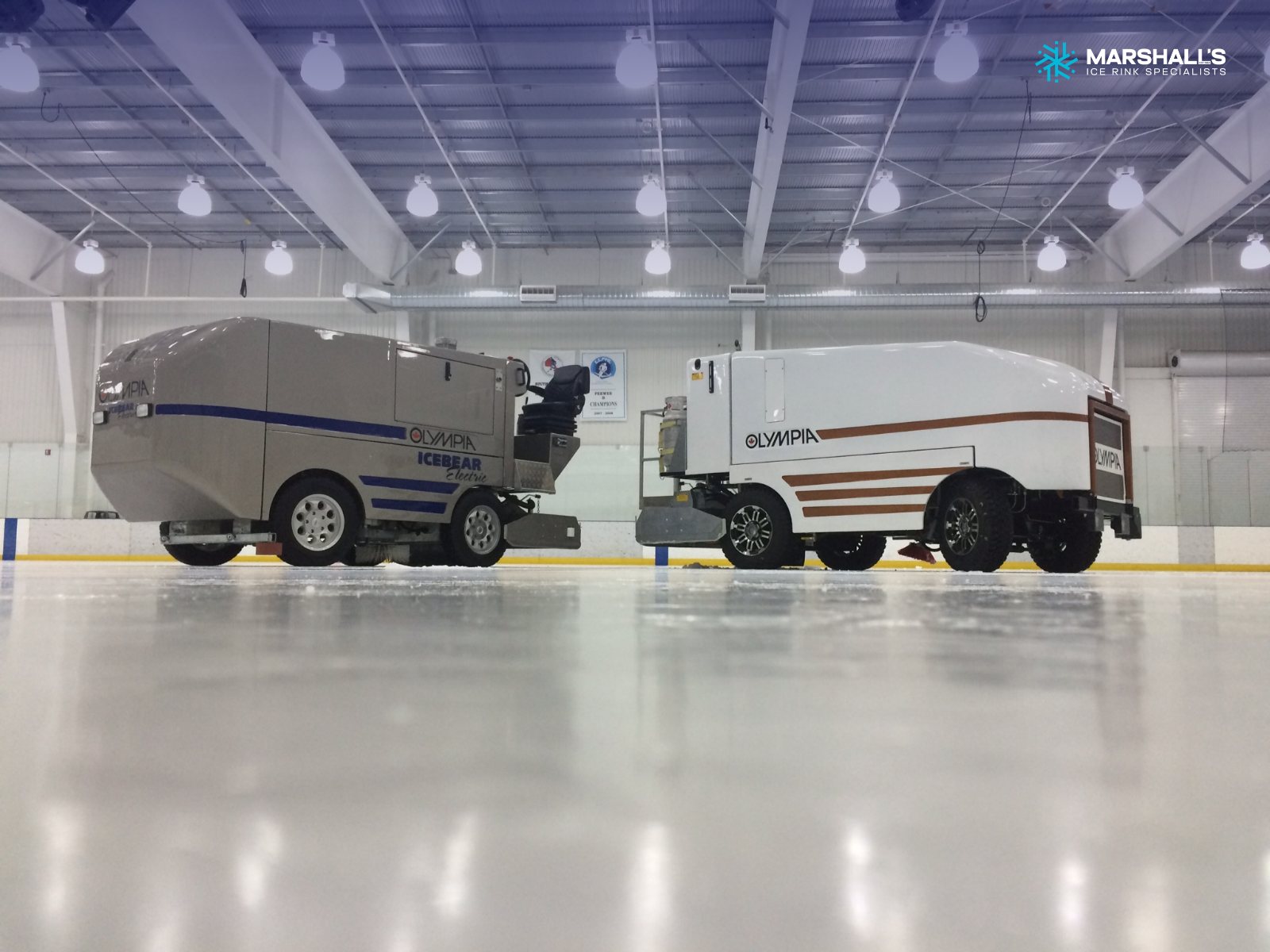
It’s one of the first questions every rink operator asks and one of the hardest to answer in a single number: how much does an ice resurfacer cost? Whether you call it a resurfacer, an ice machine or (whatever the badge on the side) a Zamboni, it’s the most important piece of kit your rink owns. Without it there’s no ice worth skating on.
The honest answer is that it depends on how you buy it. A brand-new electric machine, a refurbished workhorse, a lease or a hire for the season all carry very different costs, both on day one and over the life of the machine. This guide walks through each route so you can work out which one fits your rink, your budget and your plans.
What drives the price of an ice resurfacer
Before comparing ways to buy, it helps to know what moves the price up or down:
- Size and capacity. A full-size machine built for a 60 x 30 metre pad and back-to-back hockey sessions is a different proposition from a compact machine for a smaller or temporary rink.
- Power. Electric machines cost more up front but less to run. Petrol and gas machines cost less to buy but more to fuel and maintain.
- New or refurbished. A professionally refurbished machine can cost a fraction of a new one and still give years of service.
- Options. Board brushes, edgers, upgraded conditioners, lighting and livery all add to the spec.
- Delivery, set-up and training. Getting the machine to site, commissioning it and training your drivers properly is part of the real cost, so make sure any quote includes it.
Buying new: the long-term investment
A new machine gives you the latest technology, a full manufacturer warranty and the longest working life. For a busy permanent rink running sessions from early morning to late at night, that reliability is worth paying for.
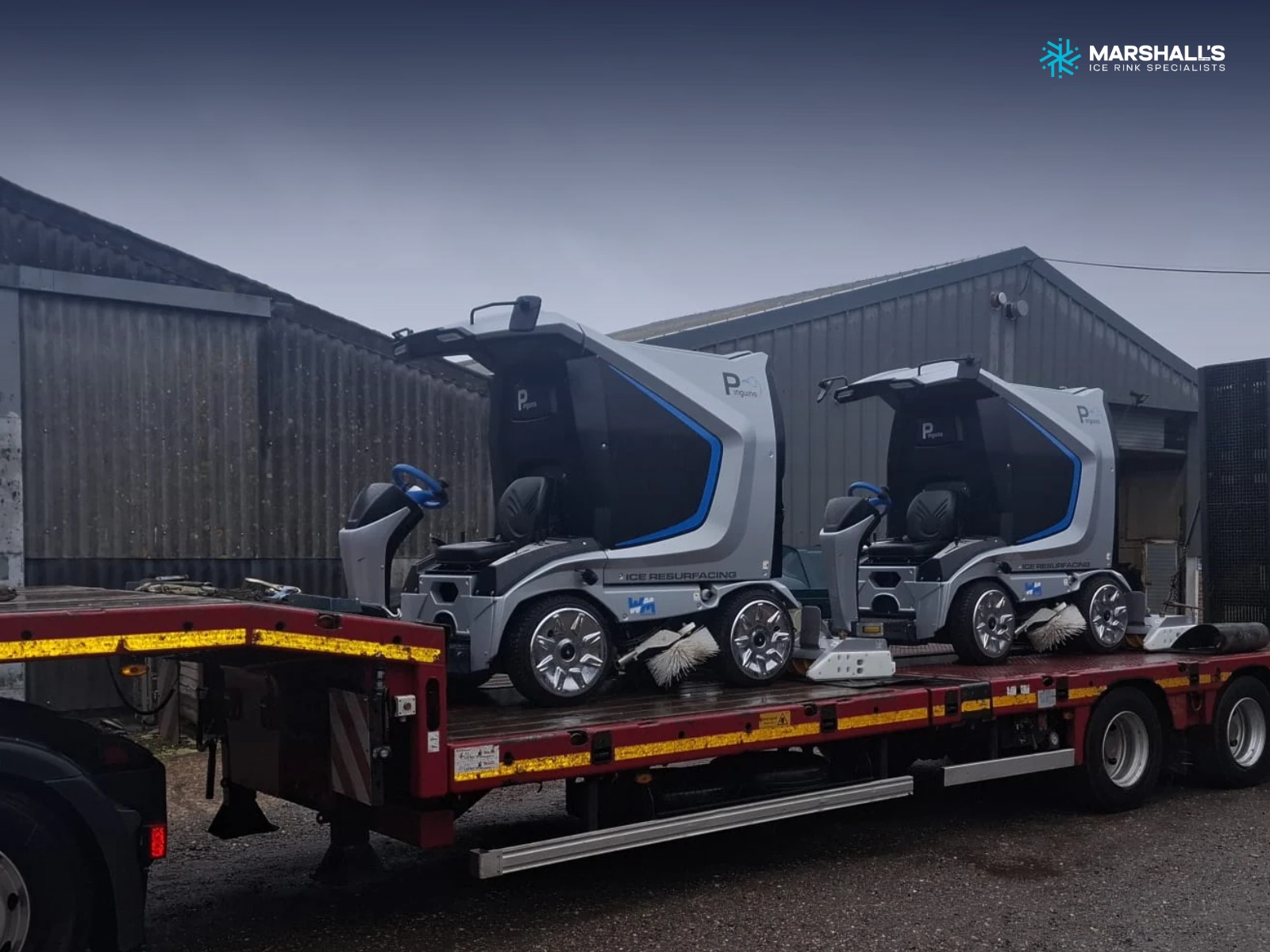
We supply new Olympia resurfacers, including the Millennium, Millennium H and the Icebear Electric, alongside the compact WM Pinguino and the WM Mammoth. New is the right choice if you plan to keep the machine for many years, want electric from the start or need a particular specification.
Refurbished: the value option
For many rinks a refurbished resurfacer is the smartest buy. A good refurbishment strips the machine back, replaces worn parts, overhauls the conditioner and hydraulics and returns it ready for years of work, at a much lower price than new.
The key word is good. A cheap used machine with an unknown history can cost more in repairs than it saved. Buy from a specialist who refurbishes in-house, knows the machine inside out and will still be there with parts and engineers after the sale. Our refurbished Olympias work in rinks across the UK and further afield, including two Olympia 500s recently shipped to a client in Mexico.
Leasing: spread the cost
Leasing lets you put a new or refurbished machine on the ice without a large capital outlay. You pay monthly over an agreed term, which makes budgeting simpler and frees up cash for the rest of the rink.
Leasing suits operators who want a newer machine than their capital budget allows or groups replacing several machines at once. Some of the UK’s busiest rink operators lease their Olympias through us on multi-year terms, with servicing arranged alongside. We have an Olympia Millennium H arriving now and three more machines inbound, all available to buy or lease.
Hiring: seasonal rinks and cover
Hire is the obvious route for temporary and seasonal rinks. If your rink only runs for six or eight weeks over Christmas, there’s no sense buying a machine that will sit idle for ten months of the year. Our hire fleet, including the electric WM Pinguino, goes out to venues and events across the country every winter.
Hire is also valuable cover for permanent rinks. If your own machine has to come off the ice for repair mid-season, a hire machine keeps sessions running and income coming in. It’s worth knowing who you’d call before you need them.
Electric or petrol? The running-cost question
The purchase price is only part of the story. Over the life of a machine, running costs can matter just as much.
Electric resurfacers cost more to buy but are cheaper to run: no fuel bills, fewer engine parts to service and no exhaust fumes inside the building. That last point also cuts the demand on your ventilation and improves the air for skaters and staff. They’re quieter too, which suits venues hosting events.
Petrol and gas machines are cheaper to buy and still do an excellent job, particularly on outdoor rinks. If you’re weighing the two, look at the total cost over the years you expect to own the machine, not just the price on day one.
The costs people forget
Whichever route you choose, budget for the things that keep a resurfacer working well:
- Blades need regular sharpening and replacement. A blunt blade means poor ice.
- Servicing. An annual service, ideally before the season starts, prevents most breakdowns.
- Parts. Genuine parts available next day make the difference between a closed session and a closed week.
- Driver training. A well-trained driver gets better ice from any machine and causes less wear.
A supplier who can cover all of these from one team will save you time and money over the life of the machine.
Which option is right for your rink?
- Busy permanent rink, long-term plans: buy new, ideally electric.
- Permanent rink on a tighter budget: a professionally refurbished machine.
- Want a newer machine without the capital outlay: lease.
- Temporary, seasonal or event rink: hire.
- Need cover while your own machine is repaired: short-term hire.
Many rinks combine routes, for example owning their main machine and hiring cover when it’s in for repair.
Get a straight answer on price
Because every rink is different, we don’t publish one-size-fits-all prices. Tell us about your rink, how you use it and your budget and we’ll give you an honest recommendation and a clear quote for buying, leasing or hiring. We’ll tell you if refurbished makes more sense than new, too.
Marshalls International has supplied, serviced and supported ice resurfacers since 1984, for community rinks and major arenas across the UK and worldwide.
Ask us for a quote →
Call 0800 092 0285 or email office@marshallsinternational.com
Frequently asked questions
How much does a Zamboni cost? + -
Zamboni is a brand name, but people use it for any ice resurfacer. The price depends on size, power (electric or petrol), whether it's new or refurbished and the options fitted. A refurbished machine typically costs a fraction of a new one and leasing or hiring avoids the up-front cost altogether. Contact Marshalls International for a quote to suit your rink.
Is it cheaper to lease or buy an ice resurfacer? + -
Buying outright usually costs less over a long ownership period, while leasing spreads the cost into monthly payments and keeps capital free for the rest of the rink. Many operators lease newer machines and buy refurbished ones outright. The right choice depends on your budget and how long you plan to keep the machine.
Are electric ice resurfacers worth the extra cost? + -
For most indoor rinks, yes. Electric machines cost more to buy but have no fuel costs, need less engine maintenance and produce no exhaust fumes inside the building. Over the life of the machine the lower running costs can outweigh the higher purchase price.
Can I hire an ice resurfacer for a temporary or Christmas rink? + -
Yes. Marshalls International hires resurfacers, including the electric WM Pinguino, to temporary, seasonal and event rinks across the UK. Hire is also available as cover for permanent rinks while their own machine is being repaired. Book early, as the winter fleet is in high demand.
Do you supply ice resurfacers outside the UK? + -
Yes. Marshalls International supplies new and refurbished resurfacers, parts and support to rinks across Europe and worldwide, including recent machines shipped to Mexico. Get in touch with your location and requirements.
by:
admin


Leave a Reply