No products in the cart.

What to Check Before the Winter Season Starts

The calendar has a way of catching rinks out. As September draws to a close and October arrives, the winter season suddenly feels a good deal closer than it did a few weeks ago — and the quiet window for getting everything ready is closing with it. One moment you’re running gentle autumn sessions; the next you’re into half term, club fixtures, Christmas parties and the busiest ten weeks of your year, with no time to fix anything you should have sorted now.
Marshalls International has supported ice rinks through four decades of winters, and the pattern never changes: the facilities that have a calm season are the ones that did the boring work early.
With the season now just weeks away, here’s a practical checklist to work through while there’s still time to act on what you find.
Winter is a narrow window
Ice rinks are seasonal in a way few businesses are. The vast majority of temporary rinks, festive attractions and busy public sessions all want the same kit for the same handful of weeks. That concentration of demand into a short window is exactly why acting early matters so much: there simply isn’t enough of everything for everyone to leave it late. The calendar doesn’t move, and neither does the first game or the opening weekend.
1. Get the machine serviced
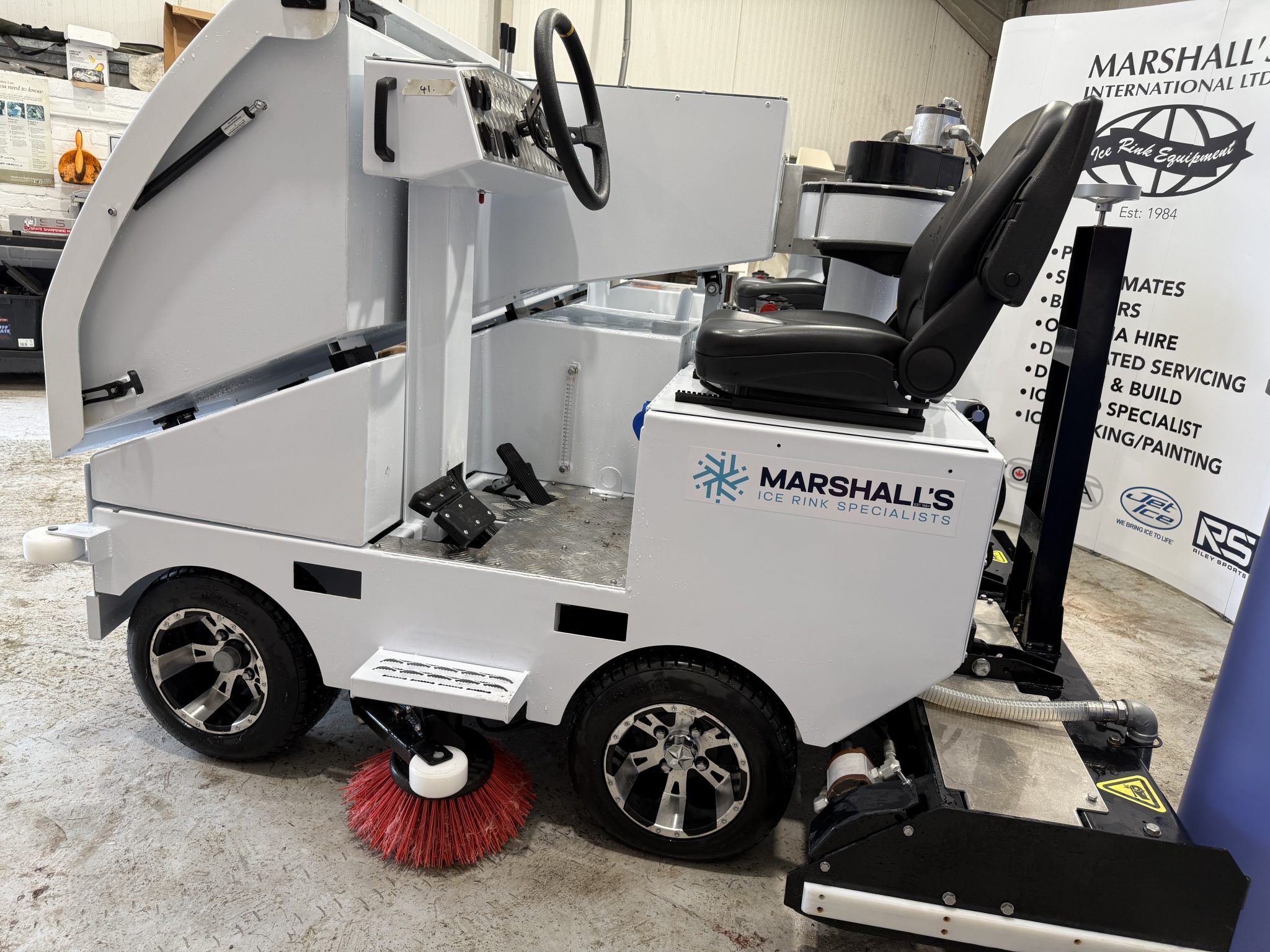
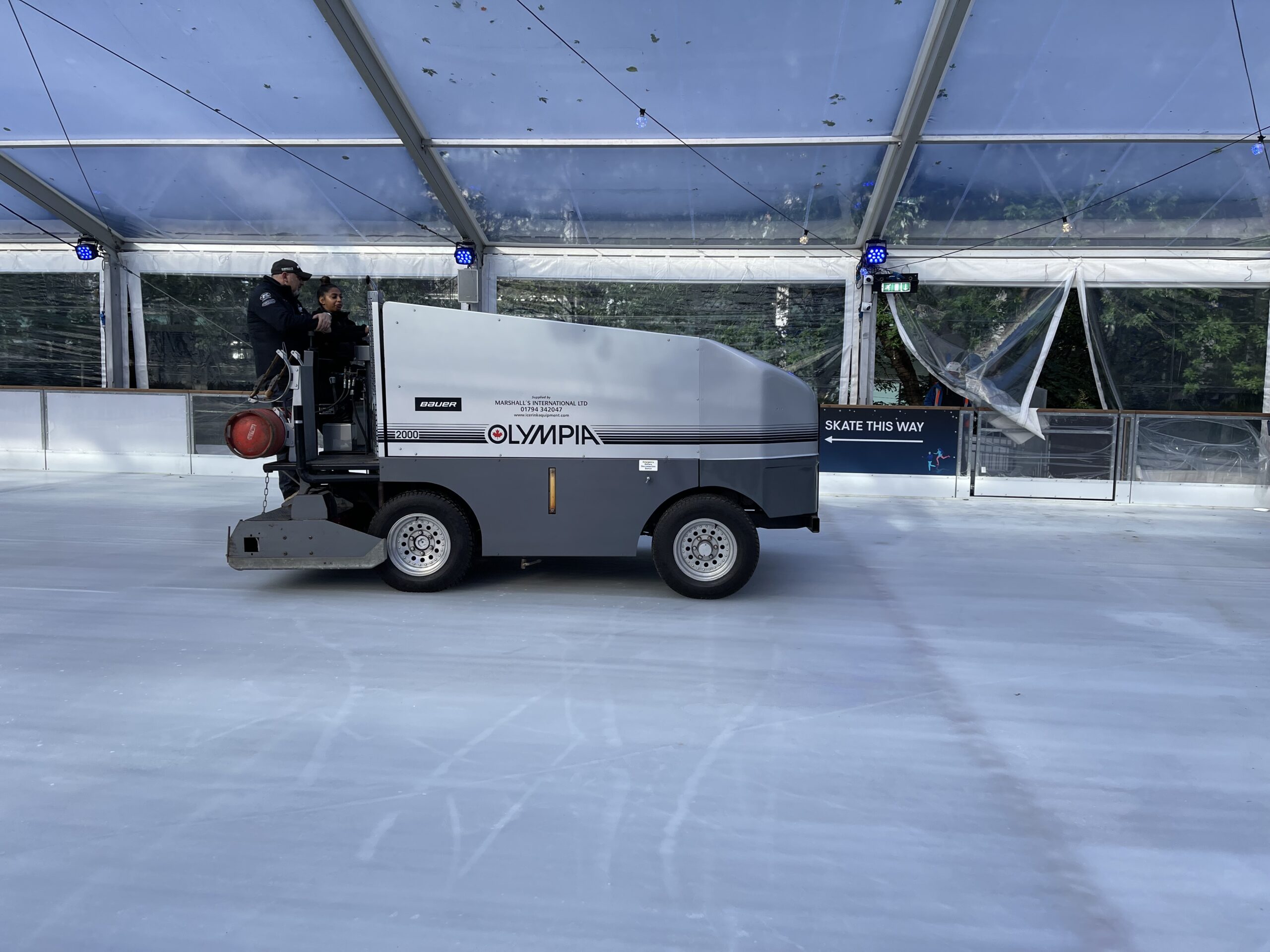
Start with the resurfacer, because everything else depends on it. If it hasn’t been serviced since the spring, book it in this week. Engineers’ diaries fill quickly as the season approaches — and they’re filling now — so a service arranged at the start of October is a far easier appointment than an emergency call-out in December.
A proper pre-season service catches the small faults — worn belts, tired hydraulics, failing batteries — that become expensive failures under heavy use. Our engineers cover all makes of machine, not just the ones we supply.
2. Check blades and edging equipment
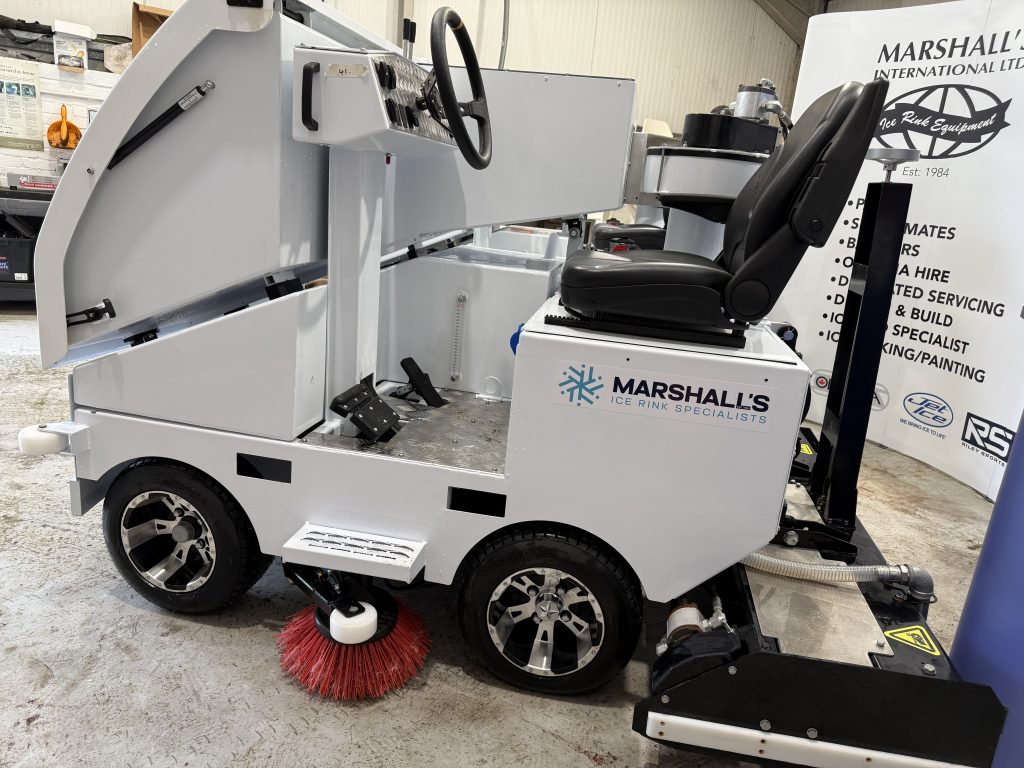
Blade condition has a direct effect on ice quality, and it degrades gradually enough that teams often don’t notice until the finish is visibly poor. Check your blade stock, get spares sharpened and ready, and make sure your edger is working properly and holding charge.
Edging is one of the first jobs to slip when a rink gets busy, so going into the season with the equipment in good order makes it far more likely to get done.
3. Stock the spares you know you'll need
Every rink has a short list of parts that fail eventually: blades, filters, belts, seals, batteries, the odd fitting. Having them on the shelf turns a potential closure into a twenty-minute job.
We hold genuine parts in stock with next-day UK delivery, but next-day is still a day — and on a busy Saturday that matters. If you’re not sure what’s worth keeping to hand for your particular machine, ask us and we’ll tell you.
4. Review your skate aid fleet
Count what you actually have, and check its condition honestly. Winter brings your highest proportion of complete beginners — school groups, Christmas parties, families skating once a year — and this is precisely when skate aids do the most work.
Being short during a busy public session means beginners on the barrier and a poorer experience for exactly the customers you most want to return. If your fleet is thin or tired, top it up now rather than in the middle of December — and be aware that stock tightens as the season nears.
5. Sort ice paint and markings
Check your lines and logos while there’s time to do something about them. Faded or worn markings look tired on camera and to visiting clubs, and any sponsor branding on your ice deserves to look its best during your highest-footfall period.
Make sure you have adequate paint and maintenance products in stock for touch-ups through the season, rather than discovering you’ve run out mid-run.
6. Check the barriers, glass and fittings
Walk the perimeter properly. Look at the barrier panels, the glass and its fittings, the gates and hinges, and the kick plates. Winter brings heavier use and more inexperienced skaters making contact with the boards.
Small repairs are quick and cheap now. The same faults during a busy fixture are a safety problem and a headache. Note anything that needs replacing and get it ordered while lead times are still comfortable.
7. Train the team
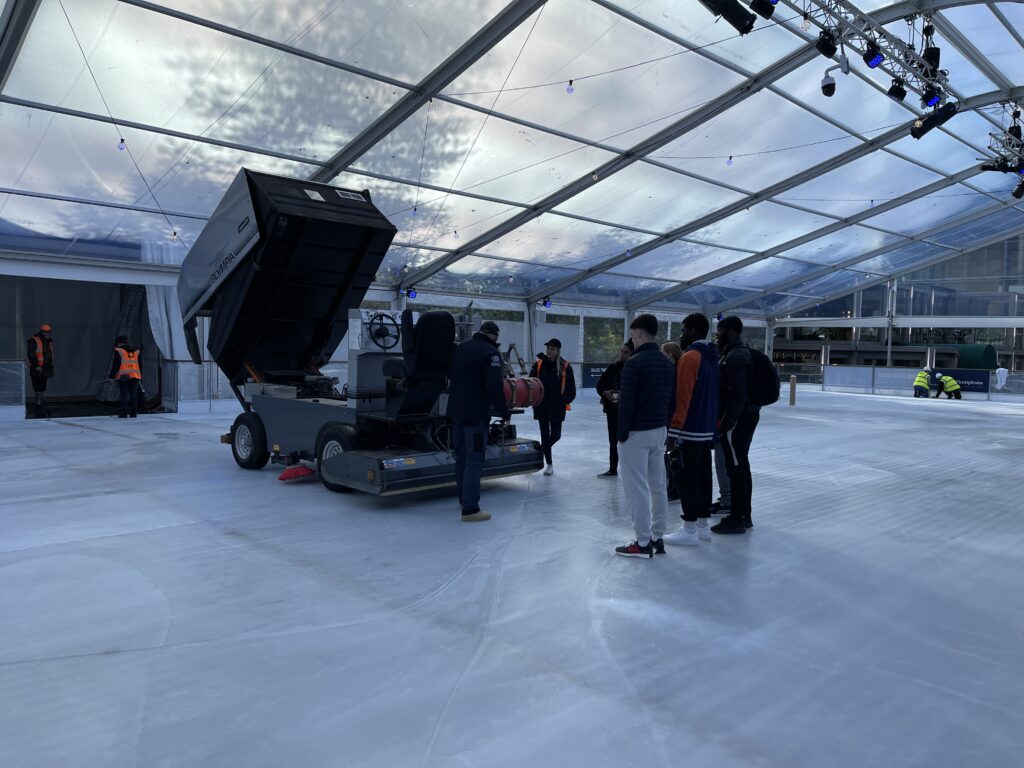
Most rinks take on seasonal staff, and the busiest weeks are the worst possible time for someone to be learning on the job. Make sure more than one person can operate the resurfacer competently and safely, carry out daily checks, and knows what to do when something isn’t right.
Our driver training covers all makes of machine with real on-ice practice. It produces better ice, reduces damage and callouts, and gives your team confidence going into the pressure period — but it needs booking before the diary closes up.
Your quick checklist
- Machine serviced and pre-season checked.
- Blades sharpened, spares ready, edger working.
- Consumable spares stocked on the shelf.
- Skate aid fleet counted, checked and topped up.
- Ice paint, markings and maintenance products sorted.
- Barriers, glass, gates and fittings inspected.
- Staff trained, including seasonal cover.
- Support arrangements and emergency numbers confirmed.
8. Confirm your support arrangements
Last, and most often overlooked: know who you’d call, and check that it covers evenings and weekends. Find out whether you’d get a part next day or next fortnight. Ask whether hire cover would be available if your machine had to come off site.
These are simple questions, and much better asked at the start of October than at eight o’clock on a Saturday in December. Our customers have access to 24/7 support with emergency call-out in the UK and France, spare parts held in stock, and a hire fleet that can keep the ice open if the worst happens.
Do it now, not in November
None of this is complicated. It’s simply far easier at the start of October, while engineers are still available, parts arrive promptly, and you have room in the schedule to act on whatever you find. Leave it a few weeks and every one of those gets harder — which is exactly why the rinks that have a calm winter are the ones acting this week.
If you’d like a hand working through it — a pre-season service, advice on spares worth stocking, training for new staff, or a top-up of skate aids before the rush — get in touch now. Since 1984 we’ve helped rinks get ready for winter, and with the season this close, the sooner we hear from you, the more we can do.
frequently asked questions
When should an ice rink be serviced before winter? + -
Ideally in late summer or early autumn — which means now. Engineers' diaries fill quickly as the season approaches, and a service booked at the start of October is far easier to arrange than an emergency call-out in December.
What spare parts should a rink keep in stock? + -
Most rinks benefit from holding the consumables that fail eventually — blades, filters, belts, seals and batteries. The exact list depends on your machine, and our team can advise on what's worth keeping to hand.
How do I prepare my rink for the busy winter period? + -
Service the resurfacer, check blades and edging equipment, stock spares, review your skate aid fleet, sort ice paint and markings, inspect barriers and fittings, train your team including seasonal staff, and confirm your support arrangements — ideally all before October is out.
Do you service all makes of ice resurfacer? + -
Yes. Our factory-trained engineers service and repair all makes of resurfacer and edger, not just the machines we supply.
Can you train seasonal staff to operate a resurfacer? + -
Yes. Our driver training covers all makes of machine and includes real on-ice practice, so new or seasonal staff are confident before the busiest period begins — but it's worth booking early, as the diary fills fast.
by:
admin